
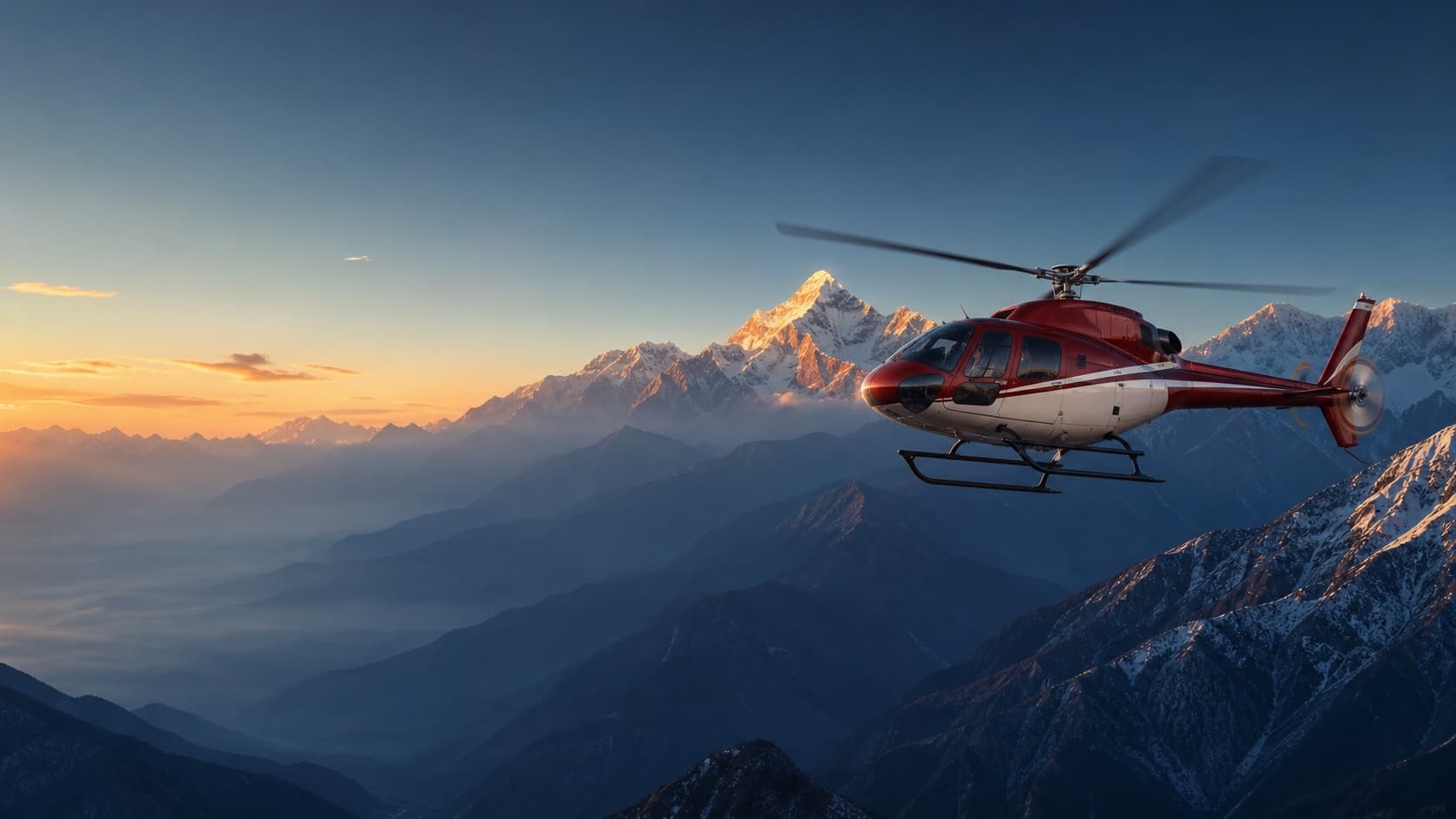
Spring and autumn are useful seasons to consider for a Nepal helicopter tour, especially when mountain visibility is the main goal. Nepal Tourism Board describes distinct seasonal changes, including the summer monsoon and clearer autumn conditions. The best date for an individual flight still depends on weather along the whole route, aircraft availability and your flexibility.
A seasonal average cannot guarantee a clear morning. Plan the tour early enough in your stay to leave an alternative date where possible, particularly if the flight is the main reason for the holiday.
Nepal helicopter seasons compared
| Period | General planning considerations | How to use this information |
|---|---|---|
| March to May | Spring travel season; conditions vary with elevation and day | Keep a flexible date rather than promising a specific view |
| June to September | Summer monsoon can bring cloud and rain | Allow more disruption flexibility and review the route specifically |
| October to November | Autumn is commonly chosen for mountain visibility | Arrange the preferred product early and retain a backup window |
| December to February | Colder conditions and winter exposure | Plan warm clothing and assess destination conditions individually |
These are broad seasonal patterns, not a route forecast. A dry area in Mustang does not guarantee clear access from Pokhara or conditions at every proposed landing point.
Why a clear hotel view does not confirm a flight
The weather above your hotel is only one part of the journey. A flight also needs suitable conditions along the corridor and at the planned destination. Cloud, visibility and wind elsewhere may affect a departure even when the city looks sunny.
Likewise, a phone weather icon is not an aviation decision. The operating crew uses the relevant information and limits for the proposed flight. Pressuring a departure because you have an onward ticket does not change those conditions.
Four different outcomes to understand before payment
| Outcome | Commercial question to settle |
|---|---|
| Delay with the flight still expected to operate | How long should you remain available and what happens if you leave? |
| Cancellation before departure | What refund, credit or rescheduling terms apply? |
| Turnback or incomplete route after takeoff | How is the operated portion charged and what is refunded, if anything? |
| Passenger cancellation or missed reporting | Which amendment or no-show conditions apply? |
These outcomes should not be treated as one universal "weather refund" policy. Sharing Heli Nepal's exact commitment for your booking belongs in the accepted written terms. This guide does not create a new refund promise.
Protect the rest of your itinerary
Keep international flights, important ceremonies and prepaid onward travel separate from a tightly timed mountain return where possible. Retain the booking contact details and stay reachable on the day. If a delay threatens another reservation, contact that provider before its amendment deadline passes.
Travel insurance may contain delay or cancellation benefits, but those depend on the policy wording and circumstances. A helicopter operator's refund and an insurer's payment are separate matters. Read the relevant terms rather than assuming one will cover whatever the other excludes.
What to do when the plan changes
Get a clear update on whether the flight is delayed, cancelled or being offered with a revised route. Compare the new experience with your reason for booking. If the alternative is materially different, understand the price and applicable choice before accepting it.
For an operated flight, follow crew decisions even when a stop is omitted. Resolve commercial questions with the booking desk afterwards using the agreed terms and the services actually provided.
See the available routes and obtain the conditions for the exact flight you intend to book.
Frequently asked questions
What is the best month for a Nepal helicopter tour?
There is no guaranteed best month for every route. Spring and autumn are common planning choices, with October and November associated with clearer autumn conditions; daily weather still decides operational suitability.
Can helicopters operate during the monsoon?
Some departures may be possible when conditions permit, but cloud and rain can make plans less reliable. A seasonal booking is not a promise that a particular route will operate on your chosen date.
Is a morning flight guaranteed to have clear views?
No. An early schedule does not guarantee visibility or suitable conditions throughout the route. Treat the reporting time as an operating arrangement, not a weather assurance.
Why was the flight delayed when Kathmandu was sunny?
Conditions at the destination or along the corridor may be unsuitable even when the departure city looks clear. The whole proposed operation must be assessed.
Do I get a full refund if weather cancels the flight?
Only the accepted booking conditions establish that outcome. Confirm the treatment of cancellation before departure separately from a turnback, partial flight or passenger cancellation.
What if the helicopter takes off but cannot complete the tour?
That is a partial-operation situation, not automatically the same as a cancelled departure. The written terms should explain charges, adjustments and any available alternatives.
Can a private charter fly in worse weather than a shared flight?
A private booking does not remove operating limits. It changes the commercial arrangement and possibly the itinerary, not the crew's obligation to use an acceptable flight plan.
How many extra days should I allow?
No fixed number guarantees success. Choose a buffer according to how important the tour is, the season and the cost of missing onward travel; more flexibility gives you more options.
Does travel insurance cover a missed international flight?
It depends on the specific policy, cause and documentation. Check the insurer's missed-departure and delay provisions before relying on coverage, and keep records of the disruption.
Plan your flight with Sharing Heli Nepal
Request the terms for your proposed flight, including postponement, cancellation and route changes, before committing to your travel dates.